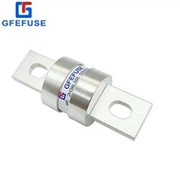
Introduction Of Overcurrent Fuses
Jul 20, 2022
A. It is an important factor for users to choose fuse links in which market they will locate their final products. Due to different views on fuse link design, two standard systems have been formed internationally for fuse links.
1. North American standard system represented by the United States and Canada (UL, CSA).
2. IEC International Electrotechnical Commission standard system represented by Britain and Germany (BS, VDE).
The two standard systems are incompatible in some specific fusing parameters. In order to solve the problem of compatibility between the two standard systems, the following modifications have been made to the two standard systems.
UL is the representative of North American standards, taking into account IEC standards, we can use ur mark.
When the IEC standard was formulated, the UMF mark, which is completely compatible with the North American Standard, appeared. As fuse links are safety components, all countries pay great attention to the safety of electrical equipment. Products without relevant safety standards will not be sold in the local market. Therefore, safety certification marks will be one of the important factors in selecting fuse links.
B. Overall dimension:
The fuse link is a replaceable element in the fuse. The size of the fuse link is standardized. Choosing the appropriate overall size is another factor in the selection of the fuse link.
C. Rated voltage:
When the fuse link works normally in the line, its power consumption is very small, so its voltage drop is also very small. However, when the line breaks down and the fuse link blows, both ends of the fuse link will bear the rated voltage of the line. One of the factors for selecting the fuse link is that it is greater than or equal to the rated voltage of the line.
D. Rated current:
The rated current of the fuse link calibration is the current that the fuse link can work normally under laboratory conditions. Because the North American (UL, CSA) standard and European (IEC) standard have different views on the fuse link design, the North American Standard fuse link should follow the following formula when selecting the fuse link current value:
Fuse link current value > = line normal working current / 0.85 IEC standard fuse link: fuse link current value > = line normal working current
E. Breaking capacity:
When the fault current passes through, the fuse link will melt and disconnect, cutting off the fault current and flowing again. However, if the fault current is far greater than the voltage and current that the fuse can withstand, the fuse link itself will explode and endanger the surrounding environment or components. The maximum fault current that the fuse link can withstand under the rated voltage is called the breaking capacity of the fuse link. The manufacturer of the fuse link will indicate the maximum fault current that the fuse can withstand. When selecting the fuse link, the user should estimate the maximum fault current that may occur in the line. The fault current must be less than the breaking capacity of the fuse link.
F. Ambient temperature:
The fuse link under laboratory conditions works at 23 ℃± 2 ℃. As the fuse link is a heating element, the ambient temperature will affect the normal operation of the fuse link. If the fuse link is to work at different temperatures